
Last updated September 22, 2026
Level 1 sweep and inspection to the NFPA 211 annual standard - flue, crown, cap, and flashing checked and photographed
Chimney sweep logs do not sweep chimneys. They loosen some creosote - which then falls where a brush and vacuum still have to collect it.
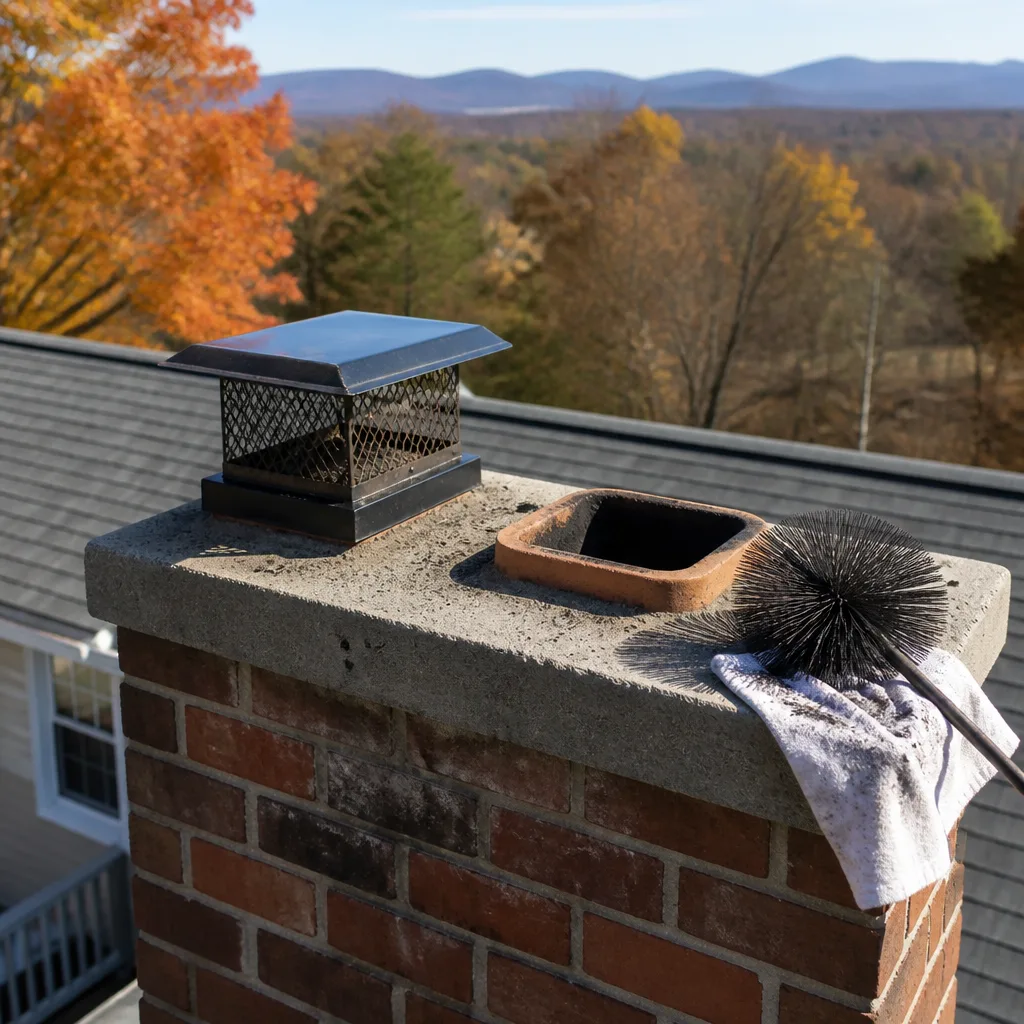
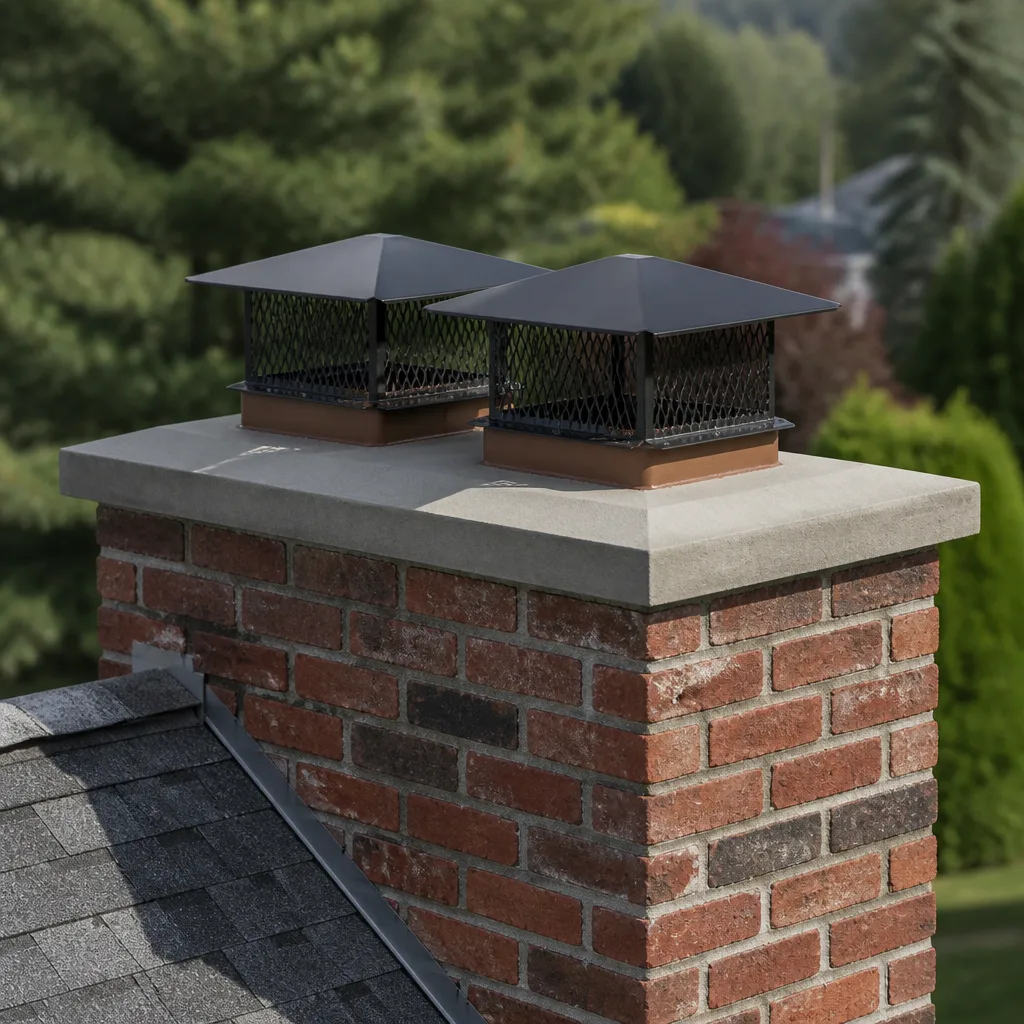
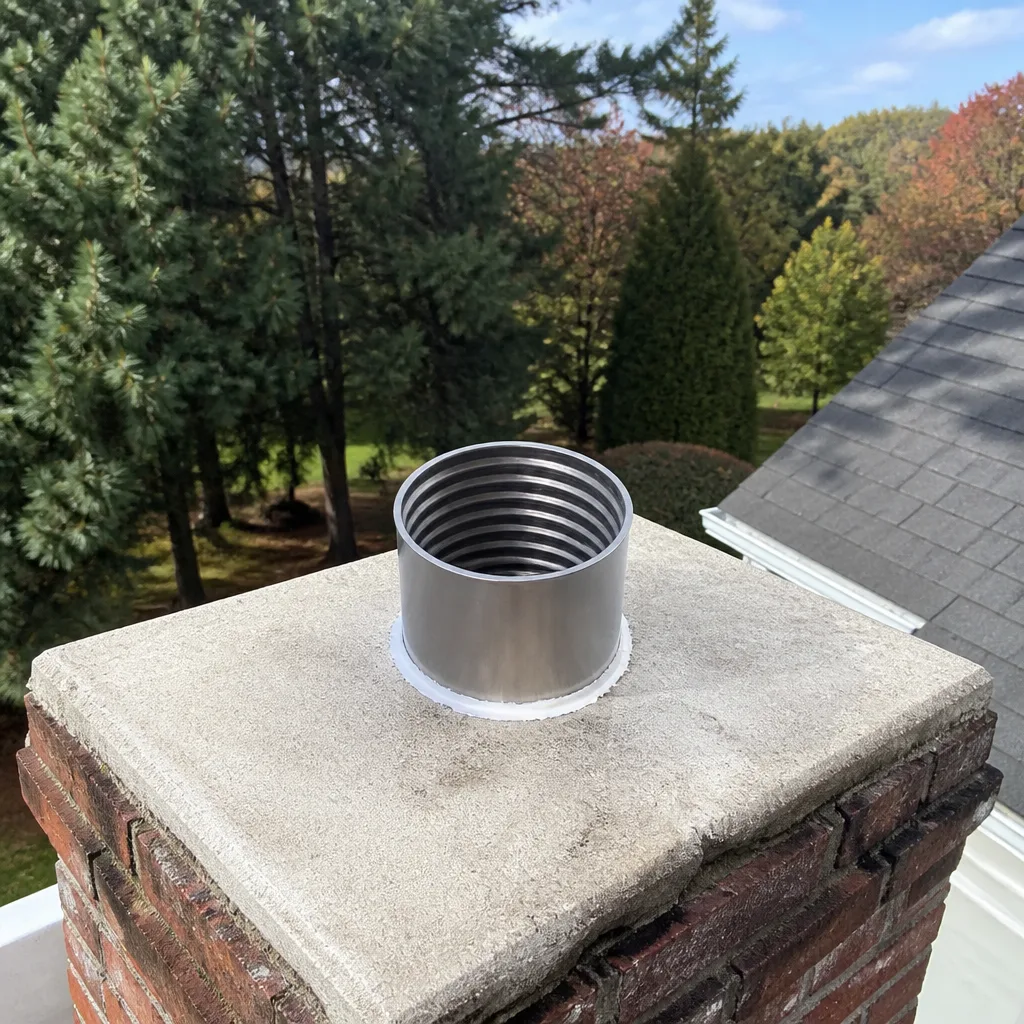
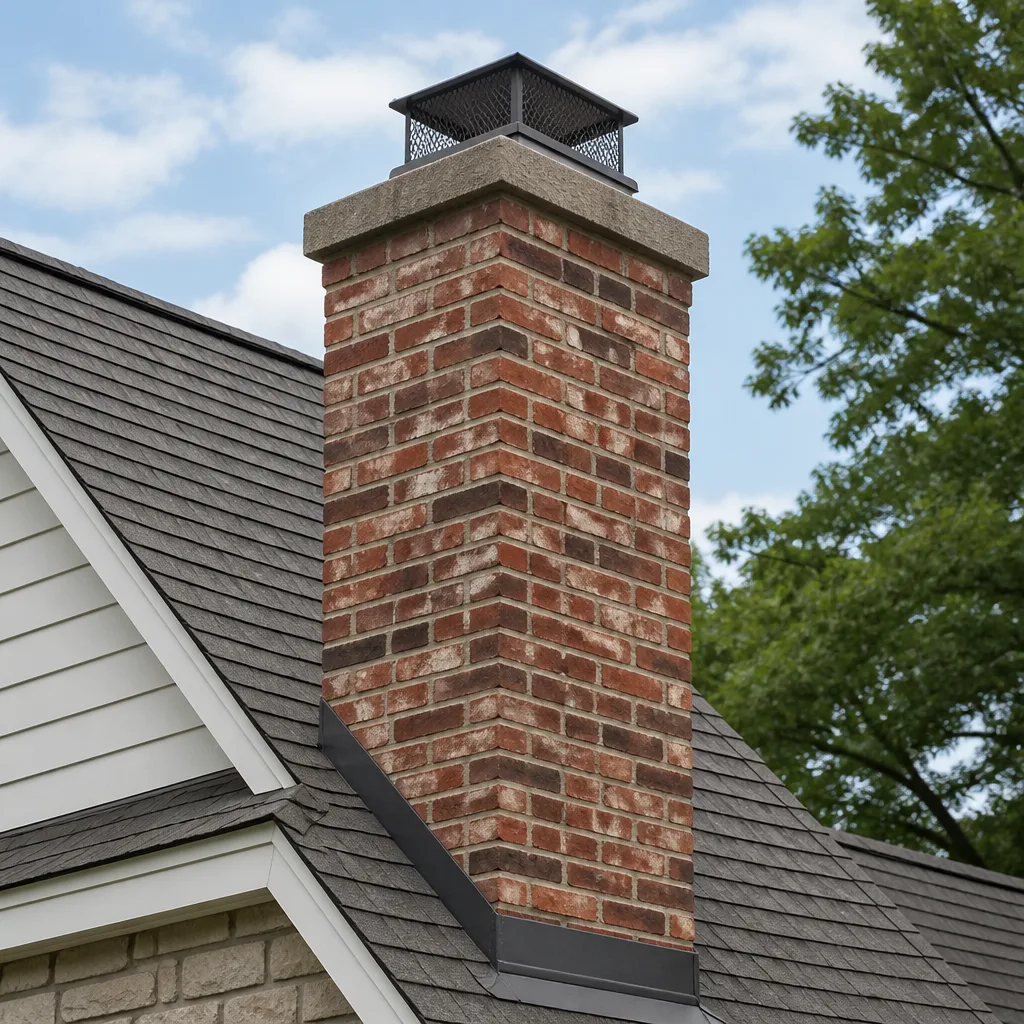
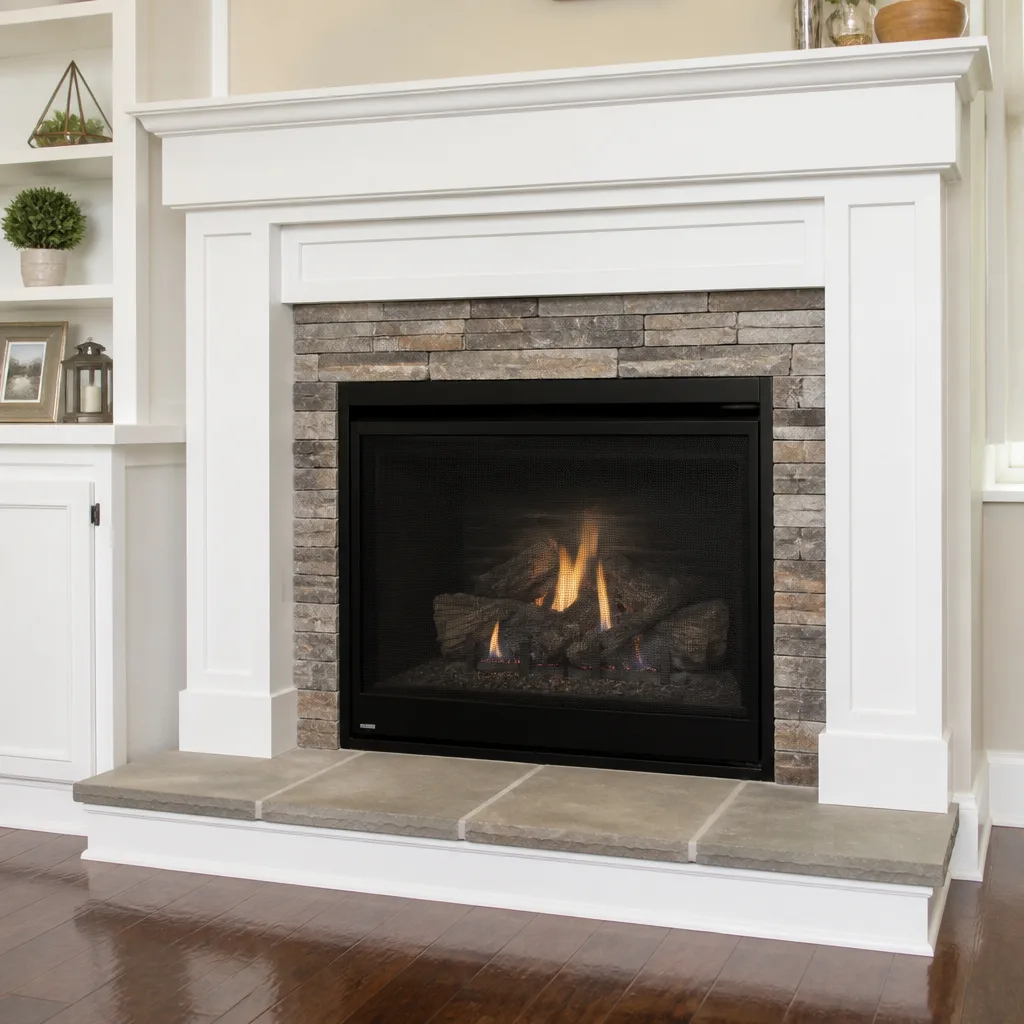
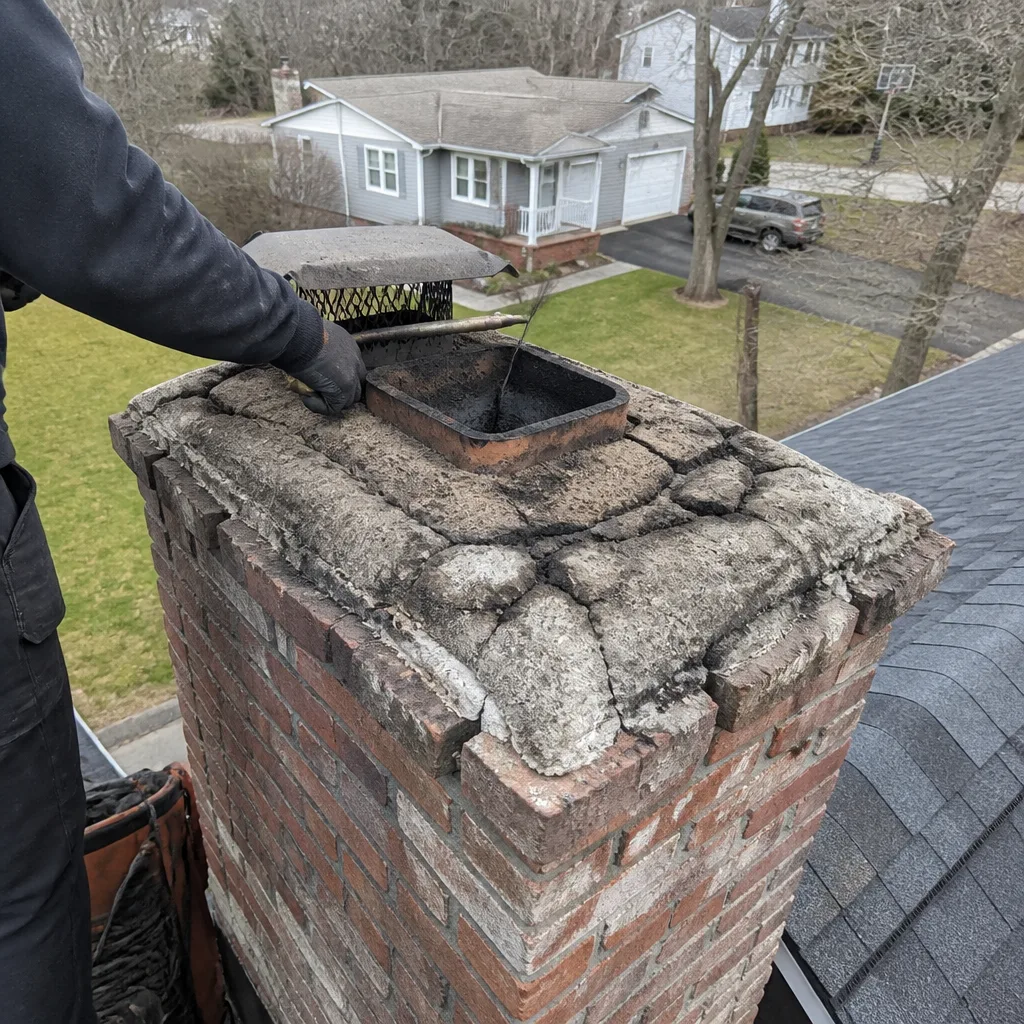 Before
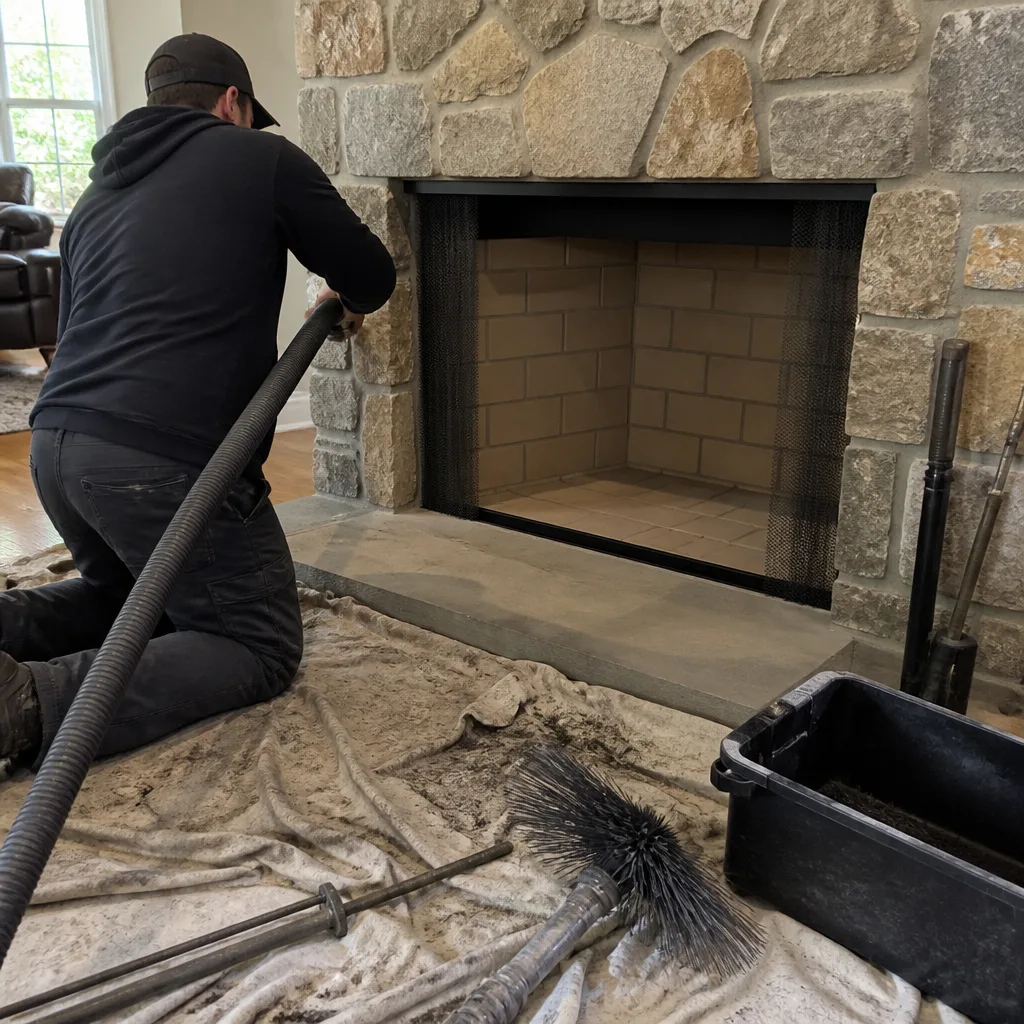 After
After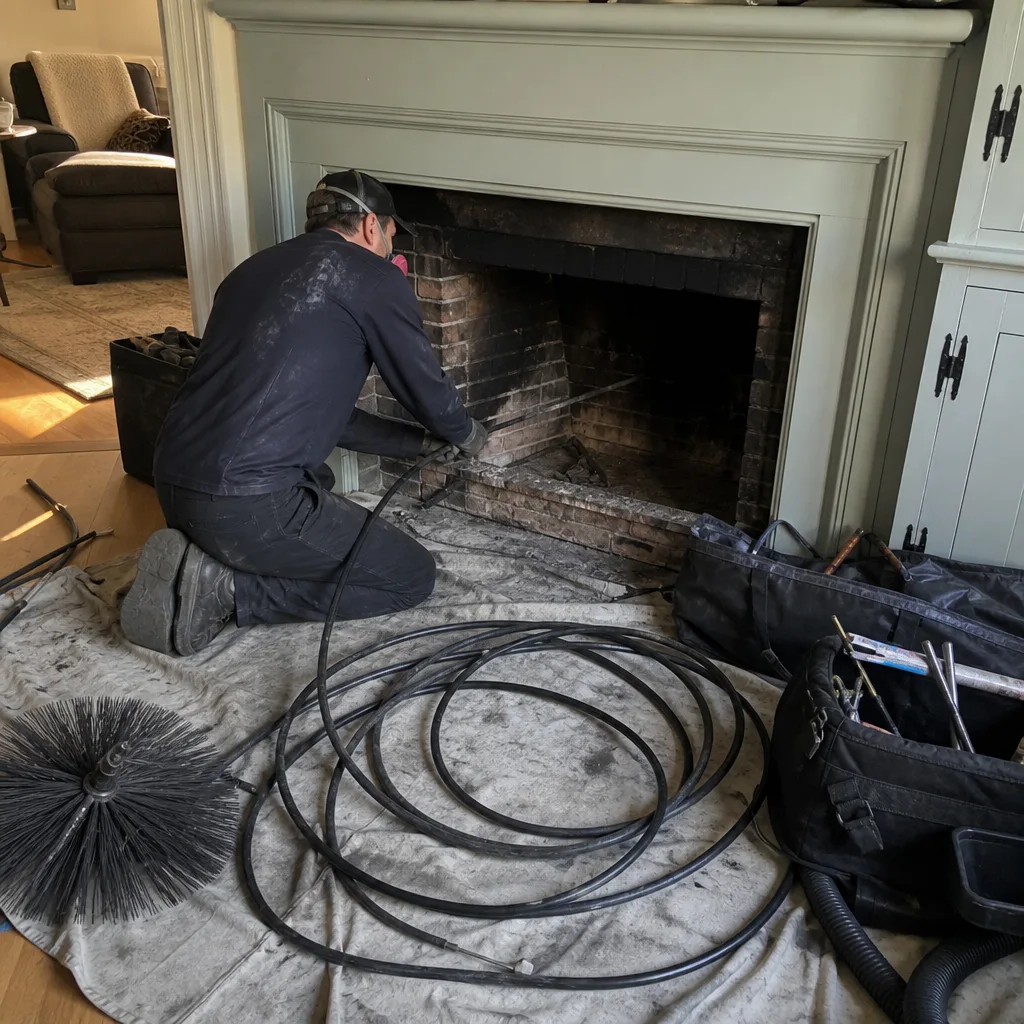 Before
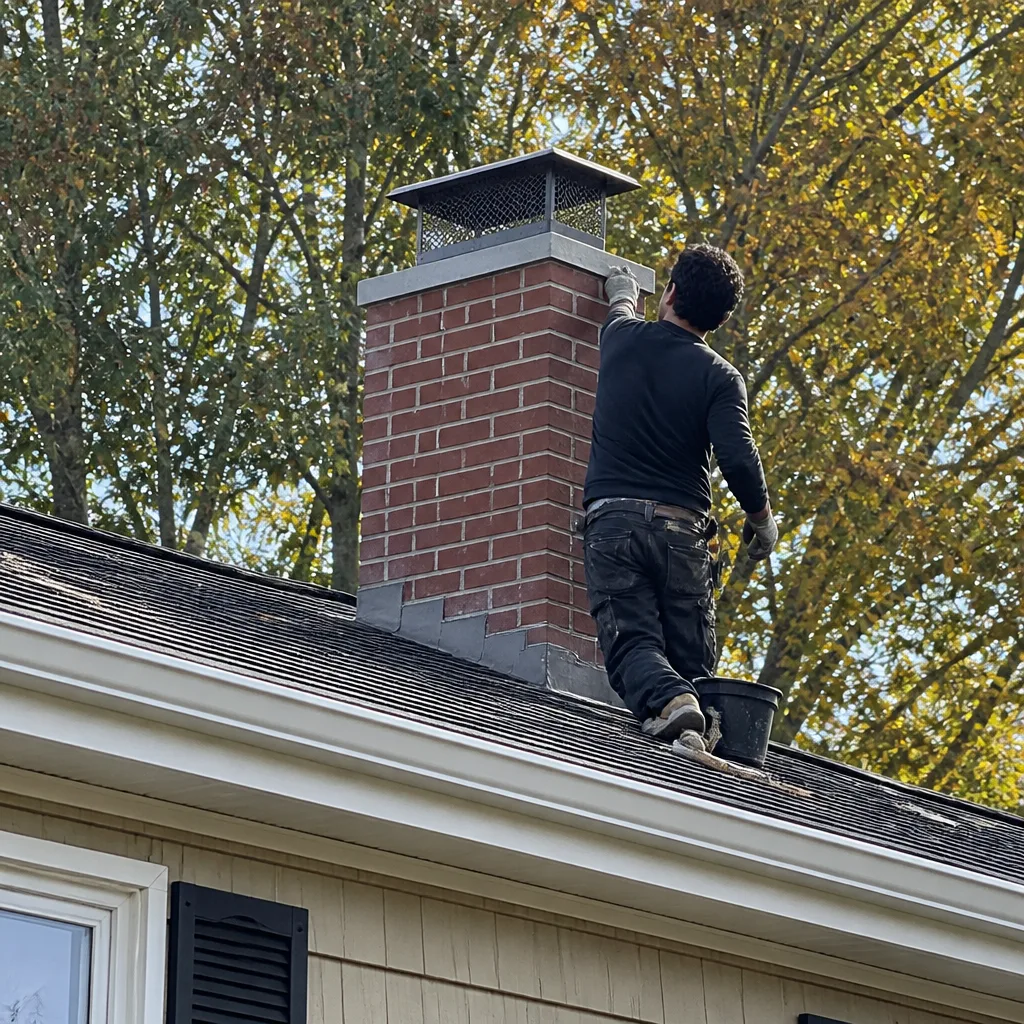 After
After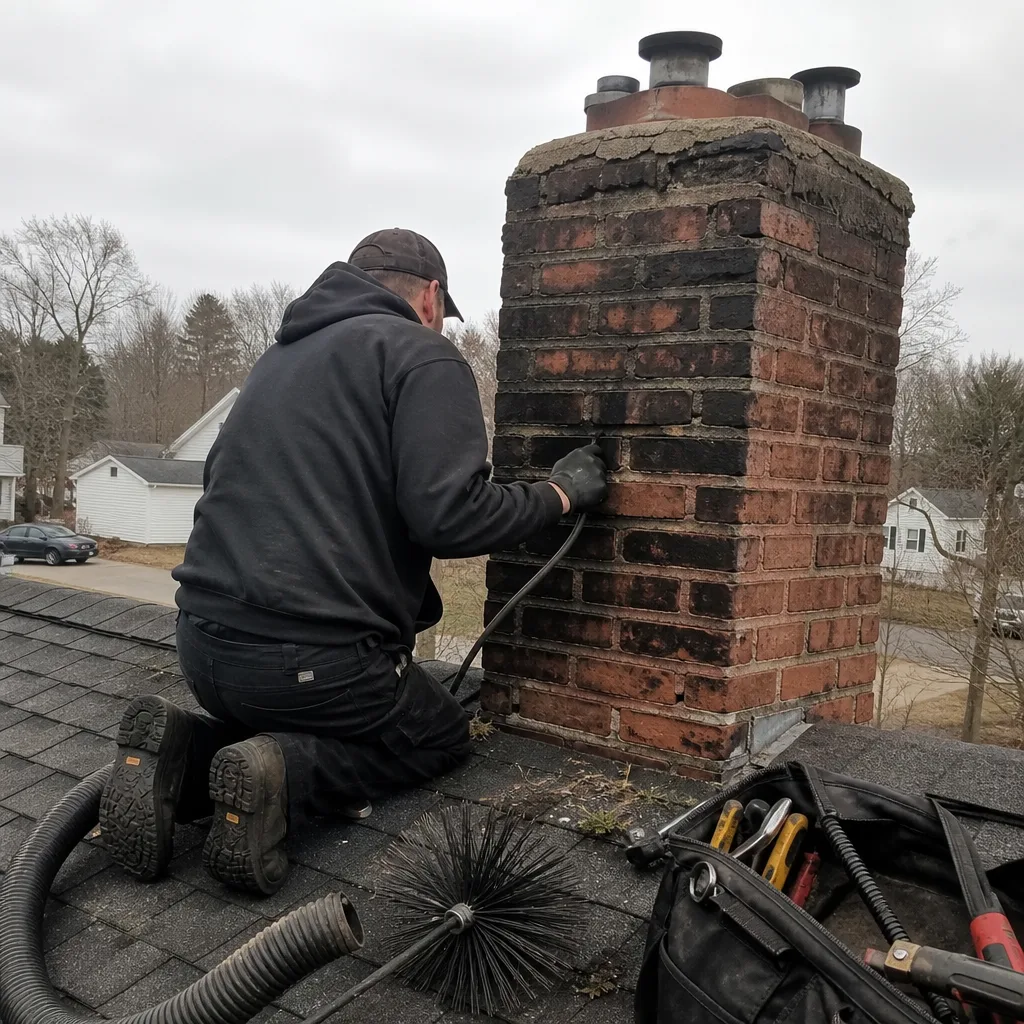 Before
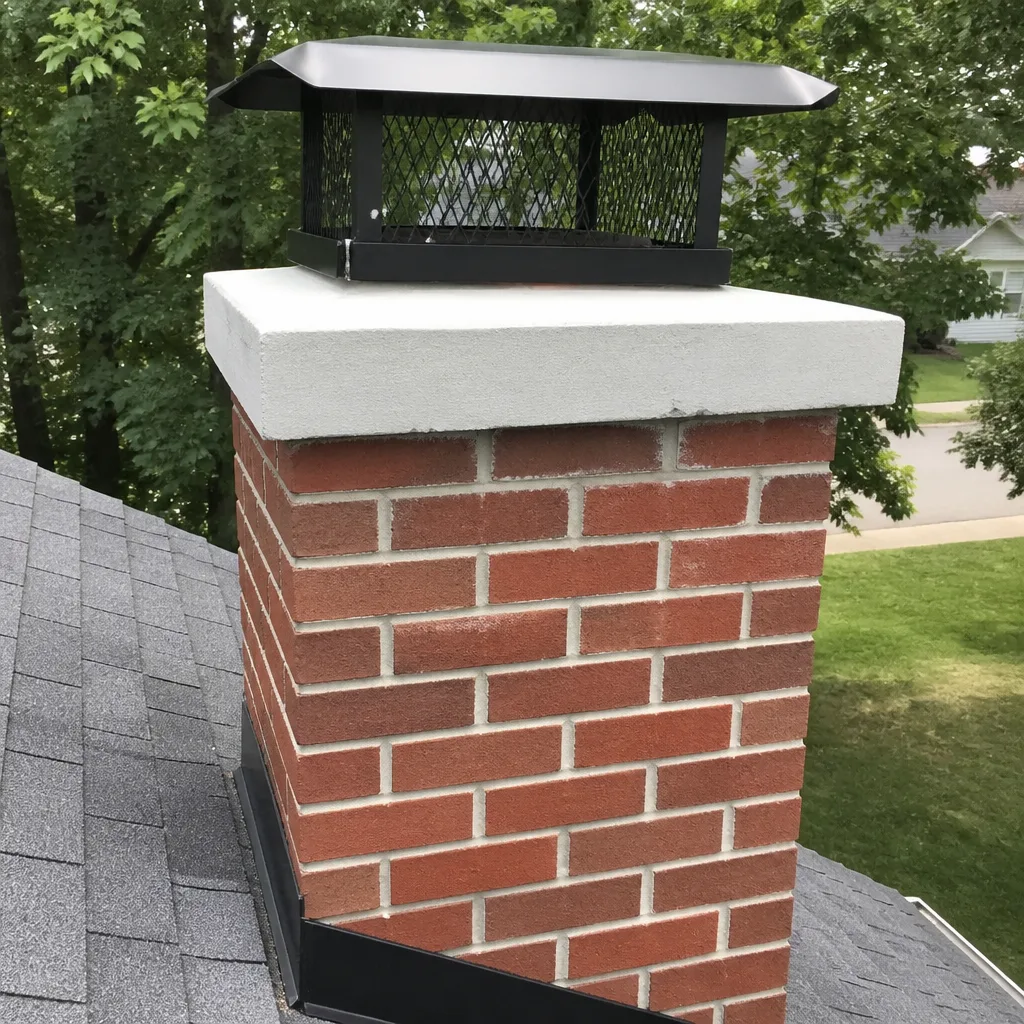 After
AfterChimney Cleaning & Sweep Maintenance Checklist for Framingham Homeowners
Here’s the problem with most chimney checklists: they treat a clean hearth and a clean flue as the same thing. In Framingham, where half our calls come from owners who swept their own firebox last weekend and assumed Chimney Cleaning & Sweep services were done, that confusion costs people their homes. Creosote glaze - the third-degree deposit that causes chimney fires - is odorless, sometimes shiny, and completely invisible without camera access to the upper flue sections where it accumulates first. You can pass a white glove over your firebrick and miss a quarter-inch of glazed creosote three feet above the smoke shelf, where temperatures peak and ignition risk is highest.
This guide - alongside our Complete Guide to Chimney Cleaning in Framingham - splits chimney maintenance into three distinct tiers: what you can observe from the firebox, what a professional sweep handles annually, and what only a camera inspection can confirm. We’ll cover Framingham’s specific housing stock - from 1950s ranch masonry caps to converted oil-system flue sizing - and give you a record-keeping template that satisfies both the NFPA 211 standard and your homeowner’s insurance underwriter.
Quick Answer
Framingham homeowners should perform monthly visual checks of the firebox and damper, schedule a professional chimney sweep and inspection annually before burning season, and obtain a camera-scan Level 2 inspection every two years or after any chimney fire, major storm, new appliance installation, or gap in service exceeding 24 months. A complete maintenance record includes dated photos of the flue interior, written scope of work, technician license number, and material specifications - stored with your homeowner’s insurance documents.
Table of Contents
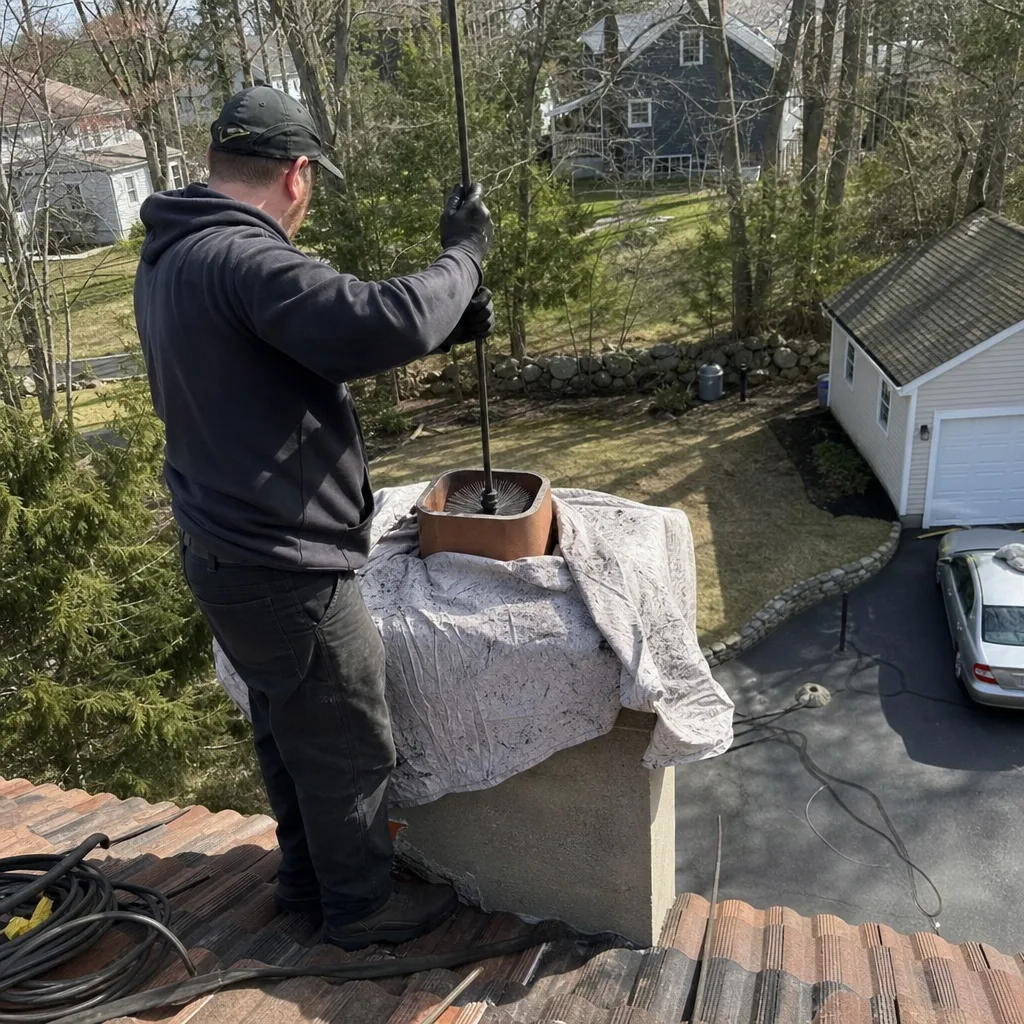
- Tier One: Monthly Owner Visual Checks
- Tier Two: Annual Professional Sweep and Inspection
- Tier Three: Camera-Scan Level 2 Inspection
- Framingham Housing Stock: What to Watch For
- Five Conditions That Trigger Level 2 Territory
- What Documentation You Should Receive at Close-Out
- Record-Keeping Template for Homeowners
- Common Mistakes to Avoid
- When to Call a Professional
- Frequently Asked Questions
 Before
 After
AfterTier One: Monthly Owner Visual Checks
These checks take ten minutes and require no tools beyond a flashlight and a mirror. They’re looking for symptoms, not diagnosing causes. What you see here determines whether you call for service or simply note it for your annual sweep.
Firebox and Hearth
Inspect the firebrick or refractory panels for cracks wider than a nickel, spalling (surface flaking that exposes porous interior), or mortar joints that have turned to powder. In Framingham’s older neighborhoods - Saxonville, the north side near the reservoir - we see accelerated spalling in fireplaces that were converted from coal to wood in the 1960s without updating the firebox lining. The original firebrick was rated for lower temperatures, and decades of over-firing have left it crumbly.
Check the hearth extension: it should project at least 16 inches in front of the opening and 8 inches to each side for fireplaces, 18 inches for stoves. If your hearth is original to a pre-1980 Framingham home, measure it. Many don’t meet current clearances because the standard changed, not because someone cut corners.
Damper Operation
Open and close the damper fully. It should move smoothly and seat completely. A damper that won’t close fully wastes heat; one that won’t open fully risks smoke backup. Note the date of any stiffness or noise - seasonal humidity in Framingham’s climate can cause rust on steel dampers, especially in homes within a half-mile of the Sudbury Reservoir watershed where groundwater is consistently high.
Exterior Visual (From Ground Level)
Stand across the street with binoculars if needed. Look for:
- Missing or displaced chimney cap - the metal or masonry top that keeps rain and animals out
- Crown cracks - the concrete slab that caps a masonry chimney, distinct from the cap itself
- Flashing gaps where the chimney meets the roof plane
- Staining on the chimney face below the roofline, indicating water intrusion
- Vegetation growing from mortar joints - roots accelerate freeze-thaw damage
Do not climb the roof. The pitch on many Framingham colonials and cape-style homes is steep enough that a fall is likely, and the freeze-thaw cycle here makes shingles brittle from November through March. What you can’t see from the ground belongs in Tier Two or Three.
Smoke Chamber (If Visible)
From the firebox, look up past the damper. The smoke chamber - the inverted funnel that channels smoke into the flue - should be smooth. If you see exposed corbelled brick (stepped brickwork) or significant soot buildup, note it. A rough smoke chamber creates turbulence that deposits creosote and reduces draft. Parging, a smooth refractory coating applied by a professional, is the fix; this is not a DIY project.
Tier Two: Annual Professional Sweep and Inspection
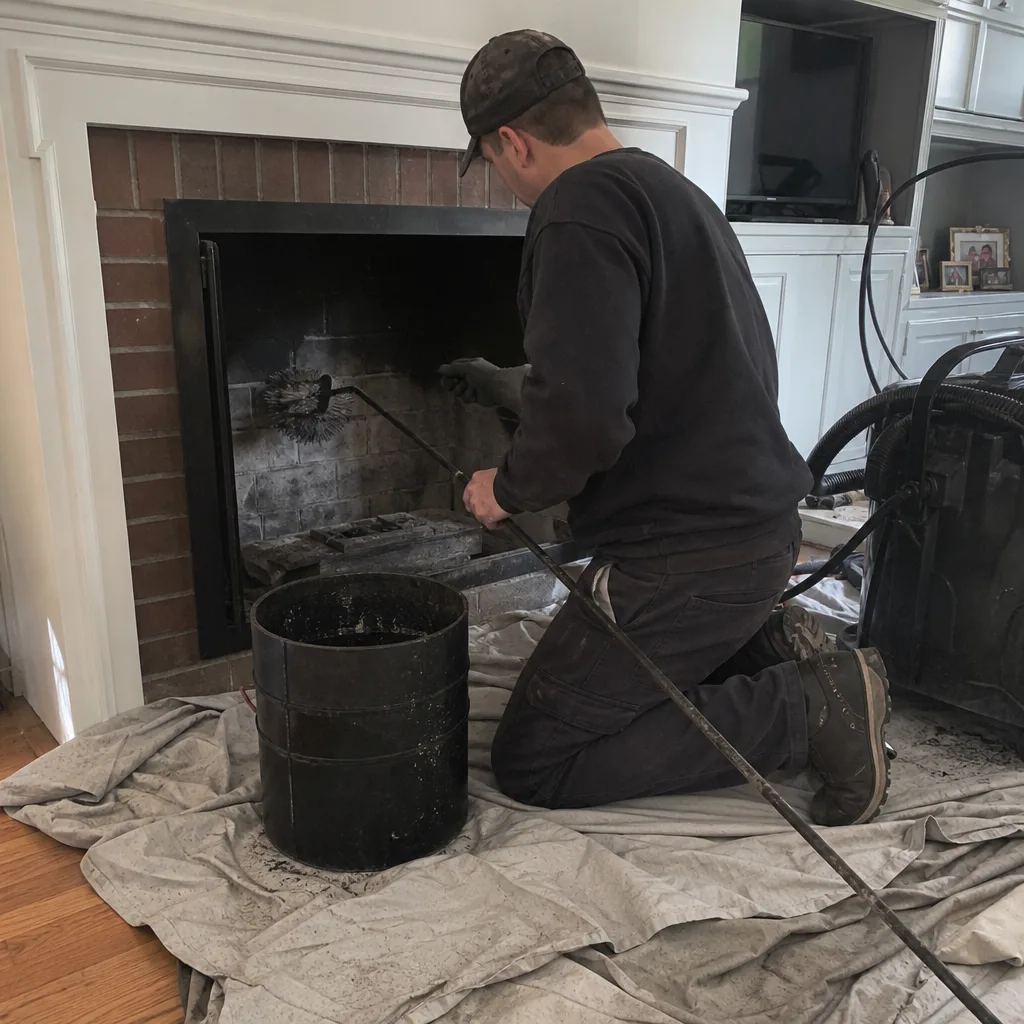
A professional chimney sweep in Framingham should include more than a brush and a vacuum. The Chimney Cleaning & Sweep in Framingham we deliver follows NFPA 211, which requires inspection of all accessible portions of the chimney structure and connector pipes. Here’s what that looks like in practice.
What Happens During the Sweep
- Pre-service documentation. The technician photographs the firebox, damper, and exterior from ground level before touching anything. This establishes baseline condition.
- Containment setup. Drop cloths, HEPA vacuum, and sealed access to prevent soot migration into living spaces.
- Mechanical cleaning. Rotary or hand brushing of the flue from top or bottom, depending on access and chimney configuration. The tool choice matters: polypropylene brushes for standard flue tiles, steel for glazed creosote removal, specialized whips for flexible stainless liners.
- Debris removal and vacuum. All soot, creosote, and nesting material removed from smoke chamber, firebox, and cleanout door if present.
- Post-cleaning inspection. Visual scan with high-output flashlight of all accessible surfaces, including the flue interior from the firebox to the extent visible.
The sweep itself addresses Class I and II creosote - powdery soot and flaky deposits. Class III glazed creosote, the hard, tar-like layer that requires chemical treatment or mechanical removal with specialized equipment, may not be fully removable in a standard sweep. If the technician reports glazed deposits, that triggers Tier Three.
What the Annual Inspection Covers
NFPA 211 defines three inspection levels. The annual sweep includes at minimum a Level 1 inspection: examination of readily accessible portions of the chimney exterior, interior, and connecting appliances. No tools required to open panels or doors.
In Framingham, where many homes have basements with cleanout doors and attics with chimney penetrations, a thorough Level 1 should include:
- Connector pipe condition from appliance to chimney thimble
- Thimble integrity (the masonry sleeve where the pipe enters the chimney)
- Cleanout door seal and corrosion
- Attic chimney passage for proper clearance to combustibles
We document all findings with photos, provide a written scope and price before any additional work, and stamp every job with our 365-Day Done Right Promise. Clause 1 of the Haven Standard requires that written price, written scope, and written warranty - no exceptions, no “call for a quote.”
Tier Three: Camera-Scan Level 2 Inspection
This is where the checklist separates appearance from reality. A Level 2 inspection, as defined by NFPA 211, requires examination of all accessible portions of the chimney structure and flue interior using video scanning or other means of internal inspection. At Level Two Chimney Framingham home, we’ve made this the default since 2009 - not an upsell, not an add-on, but Clause 4 of the Haven Standard: a documented photo record on every visit.
What the Camera Sees That Eyes Cannot
The flue liner, whether clay tile, cast-in-place, or stainless steel flexible, runs from the smoke chamber to the chimney crown. In a typical Framingham ranch or colonial, that’s 15 to 25 feet of vertical passage. A flashlight from the firebox illuminates perhaps the bottom third. The camera, on a flexible rod with LED lighting, reveals:
- Tile cracks at mortar joints, often diagonal from thermal shock
- Spalling liner surfaces that reduce flue diameter and catch creosote
- Shifting or settled liner sections that create gaps for combustion gases
- Glazed creosote accumulation patterns - typically heaviest on the north-facing flue wall where condensation is greatest
- Mortar degradation between tile joints that allows gas migration into chimney walls
In 38,000 inspections since 2009, we’ve found significant defects in the upper flue that were invisible from below in roughly 12% of chimneys that passed a standard visual check. That’s one in eight homes where the firebox looked fine and the flue was compromised.
When Tier Two Becomes Tier Three
Any of these findings during an annual sweep triggers a camera inspection: suspected glazed creosote, debris or obstruction that can’t be fully removed, visible liner damage from below, or customer report of draft problems, smoke spillage, or unusual odors. See our Chimney Cleaning Warning Signs: A Framingham Homeowner’s Reference Guide for the full list. We don’t guess. We camera.
The inspection produces a video file and still images, stored with your job record and available to you, your insurance underwriter, or your real estate transaction attorney. In Framingham’s active market, where homes in neighborhoods like Callahan State Park area and Framingham Centre sell within days of listing, this documentation has prevented last-minute transaction delays for our clients.
Framingham Housing Stock: What to Watch For
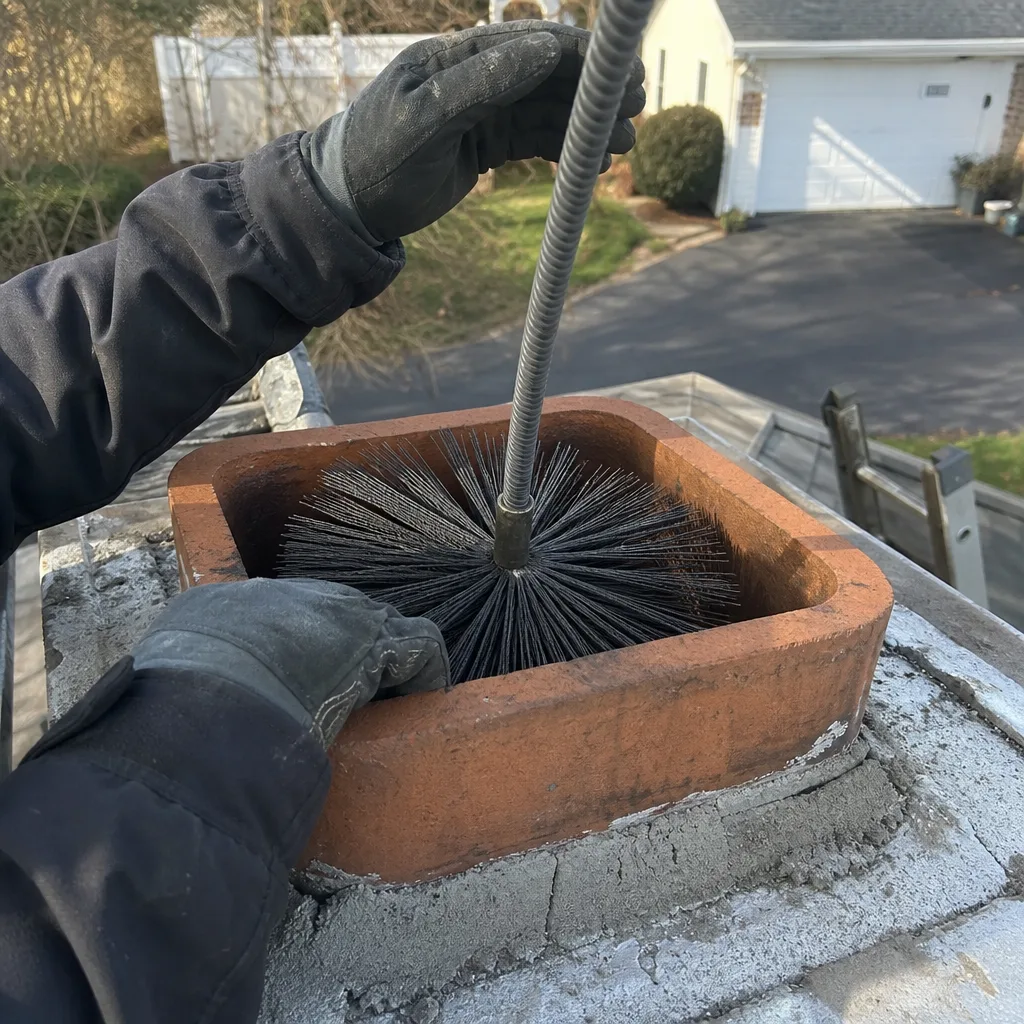
Framingham’s housing spans nearly three centuries, and each era presents distinct chimney concerns. A checklist that treats a 1920s colonial on Edgell Road the same as a 1985 raised ranch on Flutie Pass will miss critical specifics.
Pre-1950 Masonry: Solid but Altered
These chimneys were built for coal or wood, often with oversized flues and no liner. Many were “parged” with a thin mortar wash that has deteriorated, leaving bare brick exposed to acidic flue gases. The unlined flue also allows faster heat transfer to combustible framing, a clearance concern that wasn’t code when built. We’ve found original 1890s chimneys in the Chimney Repair in Framingham territory with no detectable liner remaining, operating on the thermal mass of thick brick alone.
Watch for: deteriorated parging, efflorescence (white mineral deposits) indicating water penetration, and multiple appliance connections that overload the flue.
1950s-1970s: The Masonry Cap Era
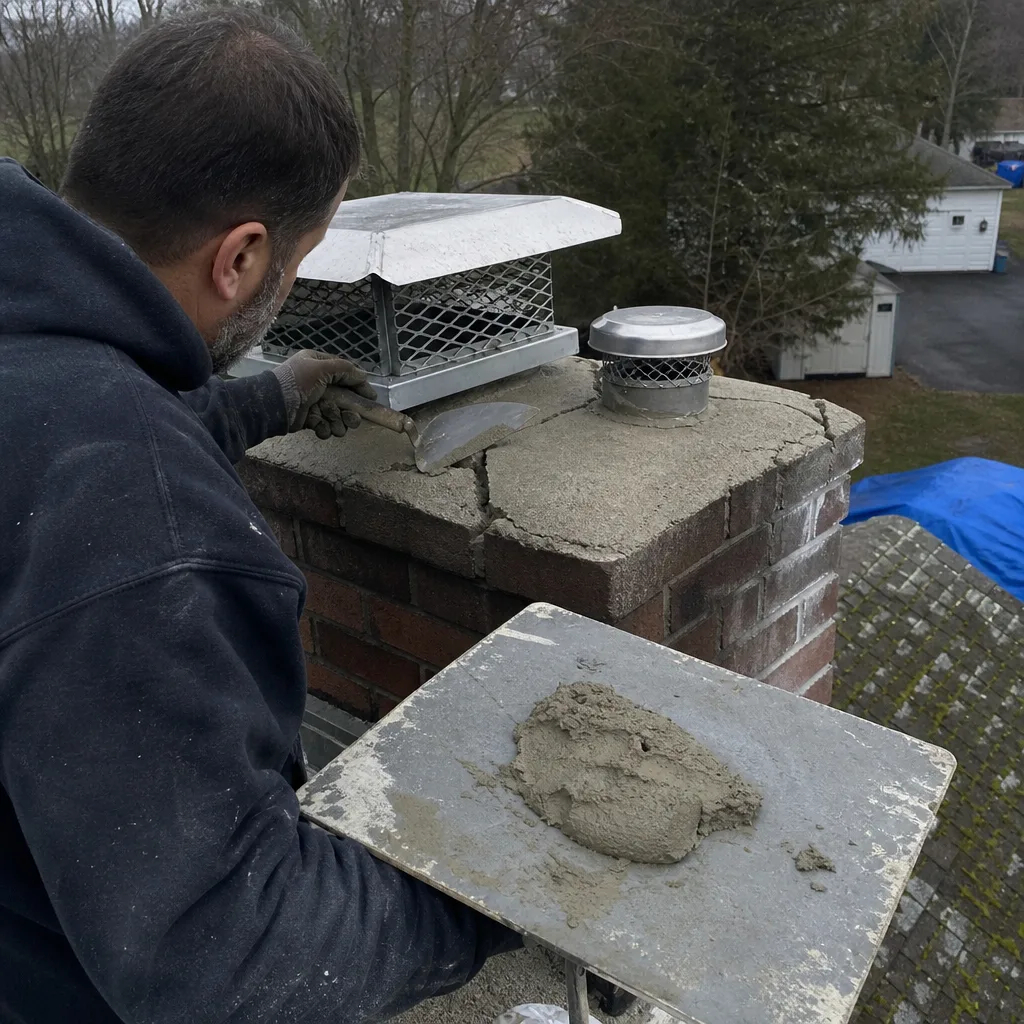
Post-war construction in Framingham’s north-side neighborhoods - Butterworth, Carmel Road area - features masonry chimneys with poured concrete crowns and metal caps. The crowns crack. It’s what they do. Freeze-thaw cycling, combined with the thermal expansion differential between concrete and brick, creates horizontal cracks that admit water directly to the chimney interior.
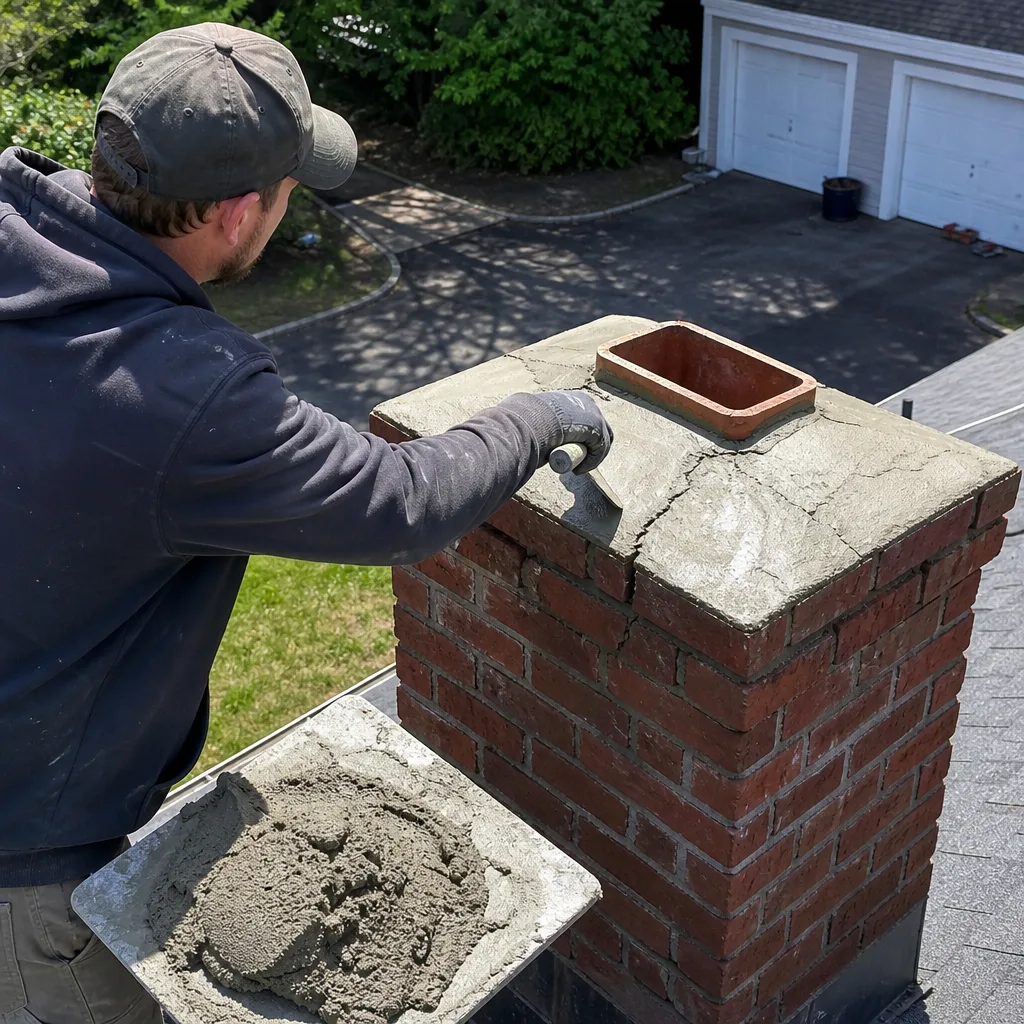
A cracked crown left through one Framingham winter typically shows spalling brick below by spring. The repair is crown sealing with a flexible membrane (we use materials from HeatShield or Gelco depending on crown condition) or full crown rebuild if structural integrity is lost. Catching it at annual sweep prevents the $2,000-$4,000 rebuild that follows two years of water intrusion.
1980s-2000s Prefab Fireplaces
Factory-built metal fireplaces with UL-listed chimney systems dominate developments like the south side near Route 9. These require specific clearances to combustibles that can’t be verified without attic access. The metal chimney chase (the framed enclosure) is often finished with siding that conceals rust or separation of chimney sections.
Critical check: the factory chase cover, typically galvanized steel with a central opening for the flue pipe. These rust through predictably after 15-20 years. Water enters the chase, rusts the metal flue, and damages the fireplace unit. Replacement chase covers from Copperfield or DuraFlex components, properly flashed, solve this permanently.
Converted Oil and Gas Systems
Framingham’s 1970s-1990s conversions from oil to gas heating often left the original chimney serving a new appliance with different venting requirements. Gas appliances produce lower flue temperatures and higher moisture content, leading to condensation in oversized flues designed for oil’s hotter, drier exhaust. The result: saturated masonry, accelerated liner deterioration, and in extreme cases, collapsed flue liners blocking the vent.
A properly sized liner - typically a flexible stainless insert from DuraFlex or rigid equivalent - is the fix. The sizing calculation considers appliance BTU input, efficiency, and vertical rise. We perform this calculation and provide the written specification under Haven Standard Clause 1.
Five Conditions That Trigger Level 2 Inspection Territory
NFPA 211 specifies Level 2 inspection requirements. In practice, these five conditions should move any Framingham homeowner from routine sweep to full camera inspection:
- New appliance installation. Whether a wood stove insert, pellet appliance, or gas log set, any change to the connected appliance alters flue gas characteristics and requires verification of liner compatibility and clearance.
- Real estate sale or purchase. The inspection is for the transaction, not the maintenance schedule. We provide documentation formatted for attorney and underwriter review, with photo record included as Haven Standard Clause 4 requires.
- Storm, lightning strike, or seismic event. Framingham’s occasional severe thunderstorms and the 2011 earthquake reminder that chimney structures experience lateral forces. Even without visible exterior damage, liner displacement or crown separation can occur.
- Chimney fire occurrence. Any suspected or confirmed chimney fire - indicated by roaring noise, dense smoke, or visible flames at the chimney top - requires immediate Level 2 inspection before next use. Thermal shock cracks liner tiles and compromises mortar joints in ways invisible without camera access.
- Gap in service exceeding 24 months. Without documented sweep and inspection within two years, creosote accumulation, animal nesting, or water damage may have progressed beyond routine sweep parameters. The camera establishes current condition and appropriate scope.
We’ve completed Fireplace Services in Framingham inspections following each of these triggers, and the camera findings change the recommended scope in roughly 40% of cases. The homeowner who expected a $275 sweep and needed a $1,800 liner repair is not surprised - they’re informed, because they saw the crack themselves on the monitor.
What Documentation You Should Receive at Close-Out
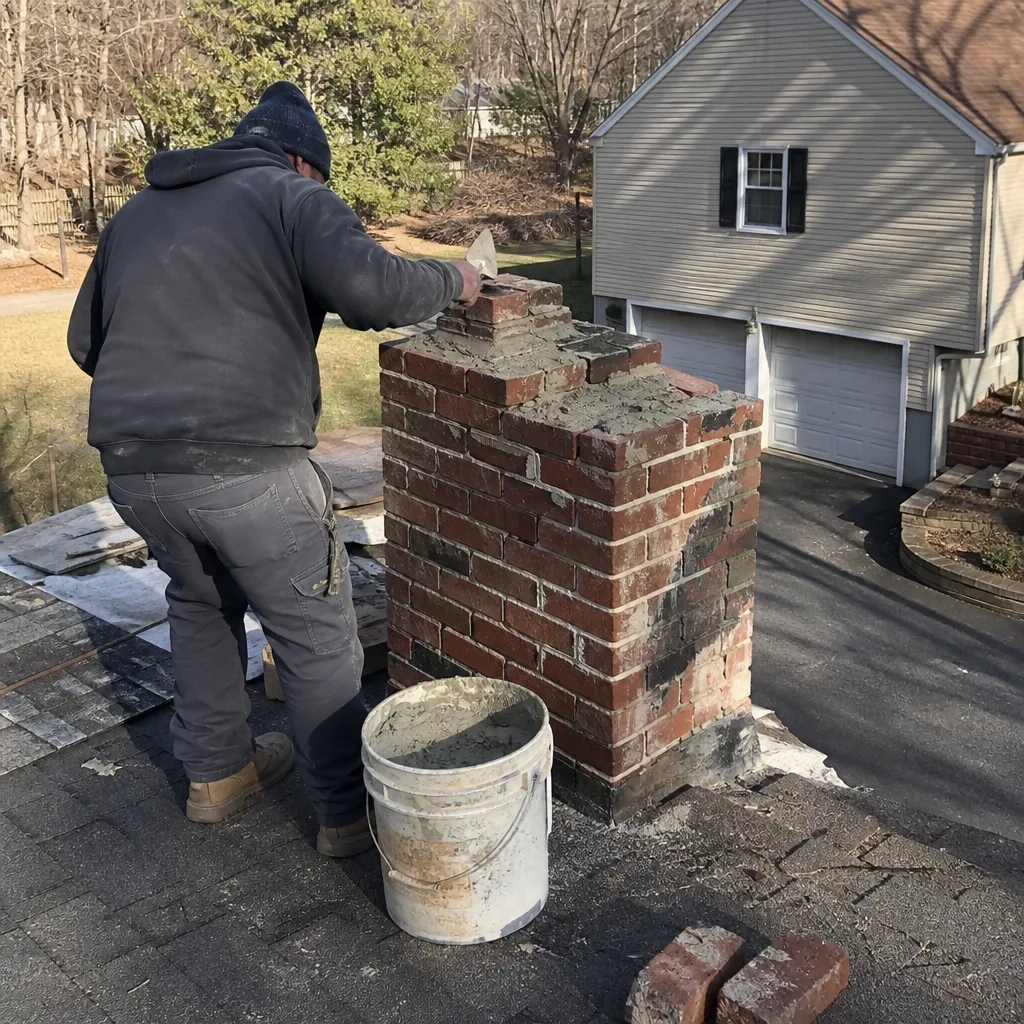
Every chimney service should conclude with documentation you can use. Not a verbal summary, not a carbon-copy receipt, but a record that satisfies NFPA 211, your insurance underwriter, and your own maintenance tracking. Here’s what we deliver on every Chimney Cleaning & Sweep in Framingham job, and what you should demand from any provider.
The Photo Record
Clause 4 of the Haven Standard requires a documented photo record on every visit - not optional, not extra. This includes:
- Firebox before and after cleaning
- Damper condition and operation
- Smoke chamber view from below
- Flue interior at multiple elevations (camera inspection jobs)
- Exterior from ground level
- Crown, cap, and flashing condition
- Any defects found, with measurement scale where applicable
These images are dated, geotagged, and stored with your job record. If you need them for an insurance claim, real estate disclosure, or warranty issue, we retrieve them. The archive practice we started in 2009 became the model for Haven Standard Clause 4 precisely because documentation resolves disputes before they become arguments.
Written Scope, Price, and Warranty
Haven Standard Clause 1: written price before any work starts, written scope defining exactly what will be done, written warranty stating terms and duration. No exceptions. The technician presents this document, explains each element, and obtains your authorization before proceeding. If additional findings during service change the scope, work stops, new written scope is prepared, and you approve before continuation.
The warranty for sweep and inspection services is our 365-Day Done Right Promise: if it’s not done right, we make it right. For repairs and installations, material warranties vary by component - HeatShield crown coatings carry specific terms, DuraFlex liners have their own coverage - and we document these in your packet.
Technician Identification
Your record includes the technician’s name and license number. Background-checked, uniformed crews are standard; knowing who was in your home is your right. We text when your technician is en route, with name and photo, under Haven Standard’s “Arrive on schedule” and “Verified crews” commitments.
Record-Keeping Template for Homeowners
Maintain a dedicated file - physical or digital - with your homeowner’s insurance documents, and browse our more guides & resources for additional maintenance tips. Insurance underwriters increasingly request chimney maintenance records after fire claims, and “we had it cleaned sometimes” doesn’t satisfy.
Minimum Record Contents
| Element | What to Record | Example |
|---|---|---|
| Service date | Exact date of service | September 14, 2024 |
| Service provider | Company name, technician name, license number | Level Two Chimney Framingham, J. Torres, LIC-XXXXX |
| Service type | Sweep, Level 1 inspection, Level 2 camera inspection, repair | Level 2 inspection with sweep |
| Appliance details | Type, make, model, BTU input if known | Heatilator wood-burning fireplace, model ND4236 |
| Findings summary | Key observations in provider’s words | Class II creosote removed; 3 cracked flue tiles at 12-14 ft; crown hairline crack |
| Work performed | Specific actions taken | Rotary sweep, ceramic whip for glazed deposits, crown seal with HeatShield |
| Materials used | Product names and specifications | HeatShield CrownCoat flexible sealant; DuraFlex 6″ flexible liner quoted |
| Next service due | Provider recommendation | Annual sweep September 2025; liner replacement recommended within 18 months |
| Photo record | Confirmation of documentation received | Yes - 23 images, video file 4:32 duration |
| Written price and warranty | Amount paid, warranty terms | $485; 365-Day Done Right Promise; HeatShield 10-year material warranty |
Store digital copies in cloud storage with your insurance policies. Physical copies should survive a house fire - a fireproof document box or safe deposit box is appropriate. The record you keep today is the evidence that protects your claim tomorrow.
Common Mistakes to Avoid
- Confusing a clean firebox with a clean flue. The firebox is where you see; the flue is where the fire risk lives. We’ve swept Framingham chimneys with pristine hearths and quarter-inch glazed creosote at the second flue joint.
- Skipping annual service because “we barely use it.” Even occasional use produces condensation cycles that deteriorate liners. Animal nesting and water intrusion don’t require burning to create blockage or damage.
- Accepting “it looks fine from here” as inspection. Any sweep who doesn’t offer camera documentation of the upper flue is selling appearance, not analysis. In Framingham’s competitive market, this remains common.
- Ignoring prefab fireplace chase covers. The rusted galvanized cover on your 1995 factory-built chimney will fail catastrophically, often without warning. Annual visual check from ground level catches it early.
- Delaying repair after a chimney fire. Thermal shock damage progresses. A cracked tile that could have been repaired in October becomes a collapsed liner requiring full rebuild by March.
- Not documenting for insurance. Post-fire, your underwriter will ask for maintenance records. “The guy said it was fine” doesn’t replace dated photos and written scope.
- DIY liner installation or crown repair. The height, combustion gases, and structural loads involved make these genuinely dangerous. Falls from Framingham’s typical two-story heights are frequently fatal; improper liner sizing causes carbon monoxide exposure.
When to Call a Professional
Call when monthly checks reveal cracks wider than a nickel, damper malfunction, exterior staining, or any draft or smoke issue during use. Call after any chimney fire, storm with visible damage, or real estate transaction. Call if your last documented service is more than 24 months past. And call if you simply want the certainty that a camera inspection provides - no symptom required.
Level Two Chimney Framingham offers free estimates in Framingham. We’ll provide a written price before any work starts, perform a camera-scan inspection with documented photo record, and back every job with our 365-Day Done Right Promise. Call (508) 850-0489 to schedule. Live phone support runs 24 hours a day, 7 days a week - you’ll speak to a person, not a voicemail system.
Frequently Asked Questions
A standard chimney sweep and Level 1 inspection in Framingham typically runs $275-$385, depending on flue accessibility, appliance type, and creosote accumulation level. A Level 2 camera inspection adds $150-$250. We provide exact written pricing before any work begins - no estimates that balloon, no “call for a quote.” Call (508) 850-0489 for your specific price; estimates are free.
NFPA 211 recommends annual inspection and cleaning as needed. For wood-burning appliances used as primary heat, that’s typically annual sweep. For occasional decorative use, inspection every year with sweep every 1-2 years depending on accumulation. Framingham’s hardwood supply (oak, maple, ash) burns cleaner than softwood but still produces creosote; the climate’s freeze-thaw cycles also make annual exterior inspection prudent.
Only if camera inspection confirms damage that compromises safety or code compliance. Cracked clay tiles, deteriorated mortar joints, or unlined masonry serving modern appliances typically require lining. We show you the camera footage, explain the specific defect, and provide a written quote with material specifications - DuraFlex flexible stainless, HeatShield cerfractory, or other appropriate solution. Nothing is recommended without photographic evidence you can see yourself, and we’ll clearly state when work can safely wait versus when it cannot.
Accumulated creosote ignites at approximately 451°F - well within normal flue temperatures during a hot fire. The resulting chimney fire can crack liners, damage surrounding structure, and spread to framing. Even without fire, water intrusion from deteriorated crowns or flashing rots roof structure and damages interior finishes. Carbon monoxide from blocked or leaking flues is odorless and potentially fatal. These aren’t theoretical risks; we’ve documented the aftermath in Framingham homes where maintenance was deferred.
A sweep removes combustible deposits from the flue and firebox. An inspection evaluates structural condition, clearances, and code compliance. They’re related but distinct: you can sweep without inspecting (incomplete), and you can inspect without sweeping (sometimes appropriate for real estate transactions). Our standard service combines both, with camera inspection added when indicated or requested.
Mechanical brushing of the firebox and lower flue is physically possible for a homeowner with proper tools and roof access. We don’t recommend it. The upper flue - where the most dangerous accumulations occur - requires specialized equipment and camera verification. More critically, a homeowner cannot evaluate liner condition, clearance compliance, or structural integrity without training. For the same reason we don’t give step-by-step electrical panel instructions, we don’t provide DIY chimney sweep tutorials: the consequences of error include house fire and carbon monoxide poisoning.
Ask four things: Are you licensed and insured? (State requirement; we display license number on every page.) Will you provide a written price before work starts? (Haven Standard Clause 1; non-negotiable.) Is camera inspection included or extra? (Clause 4 makes it standard for us.) What documentation do I receive? (Photos, written scope, warranty terms.) Any hesitation on these questions suggests you’re buying uncertainty, not service.
The Bottom Line
Effective chimney maintenance in Framingham requires three distinct efforts: monthly visual checks you perform, annual professional sweep and inspection, and periodic camera-scan Level 2 inspection to verify what eyes cannot see. The housing stock here - from pre-war masonry to converted oil systems to prefab fireplaces - presents specific risks that a generic checklist misses. Document everything: dates, findings, photos, technician credentials, materials used. That record protects your safety, your property value, and your insurance coverage. And when you hire a sweep, demand the evidence - written price before work, camera documentation of the flue, written warranty when done. Appearance is easy. Verification is what matters.
Written by Corrine Halstead, Owner at Level Two Chimney Framingham, serving Framingham since 2009.